Limits of Current Standards

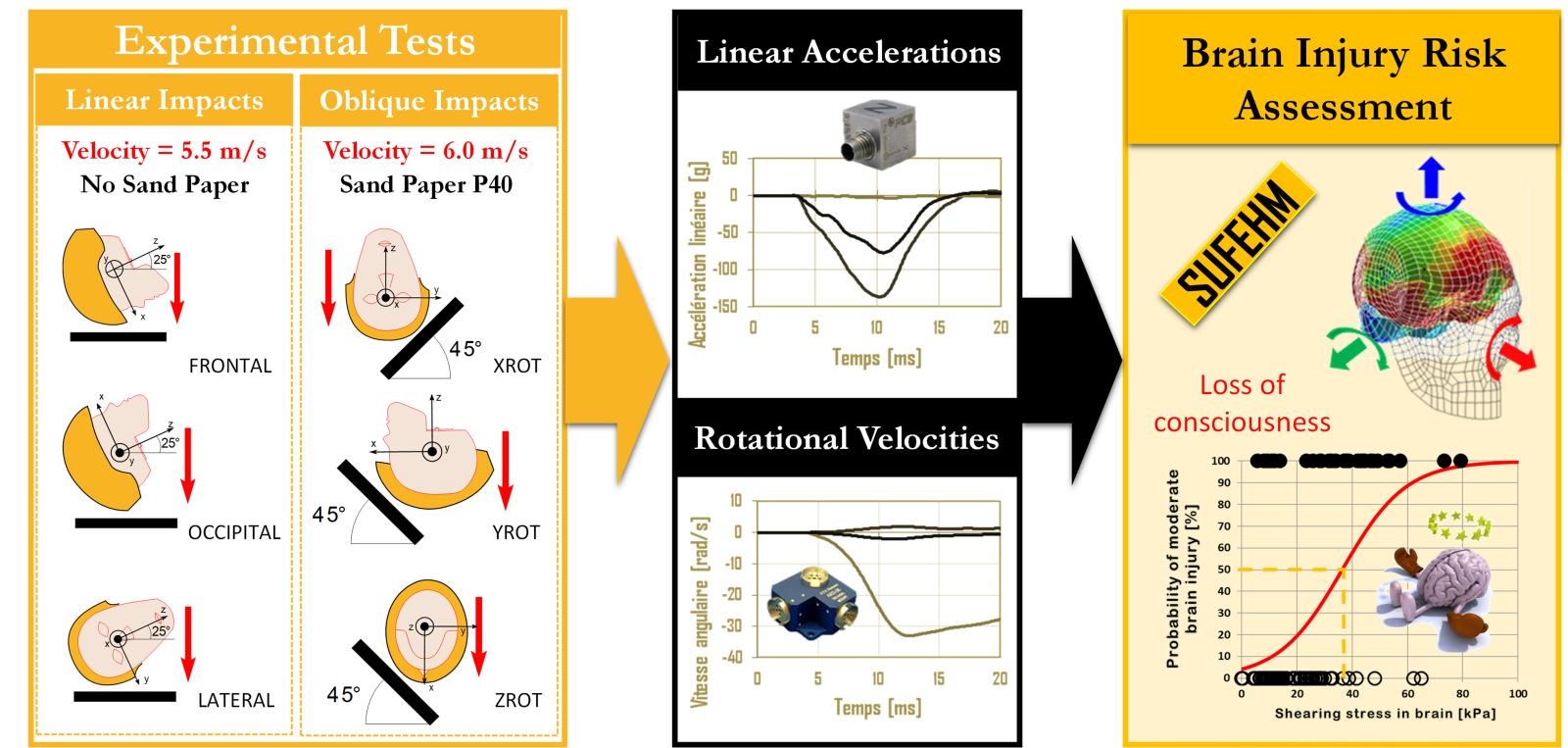
Current bicycle helmet testing standards evaluate only linear impacts, meaning impacts that are perpendicular to the impact surface. However, in real-world accidents, oblique impacts occur very frequently, for example when the head strikes the road surface with a horizontal velocity component. Certimoov has integrated these oblique impacts into its test protocol in order to better represent real accident conditions.

Even today, the European standard relies on an acceptance criterion based on acceleration measured using a rigid headform. This type of device does not accurately reproduce the behavior of the human brain and remains poorly representative of its true impact tolerance limits. Certimoov, by contrast, uses a more advanced instrumented headform combined with a mathematical model of brain behavior derived from the analysis of several hundred real-world accidents. This approach enables biomechanical engineers and Certimoov to apply more realistic injury criteria, consistent with the brain’s actual tolerance to impact.

Finally, while current standards rely on a binary acceptance criterion — a helmet is either compliant or non-compliant — Certimoov introduces greater nuance by providing a graded evaluation system, with a score ranging from 0.5 to 5.
Image
MG1_8457_2_compress

Brain Model and Mechanical Response Calculation

The Certimoov method relies on established engineering techniques similar to those used to calculate the deformation of a bridge or an aircraft wing. Applied to biomechanics, these techniques make it possible to model the human head and calculate the brain’s response during an impact.

To achieve this, a computer-assisted approach known as the finite element method is used. This method consists of dividing an object into a large number of small “elements,” each with precise mechanical properties, in order to accurately reproduce its behavior under different impact conditions.

In the brain model, these elements are assembled to reflect the gel-like properties of brain tissue. They make it possible to calculate the internal stresses, namely the pressure and shear forces experienced by the brain during an impact.

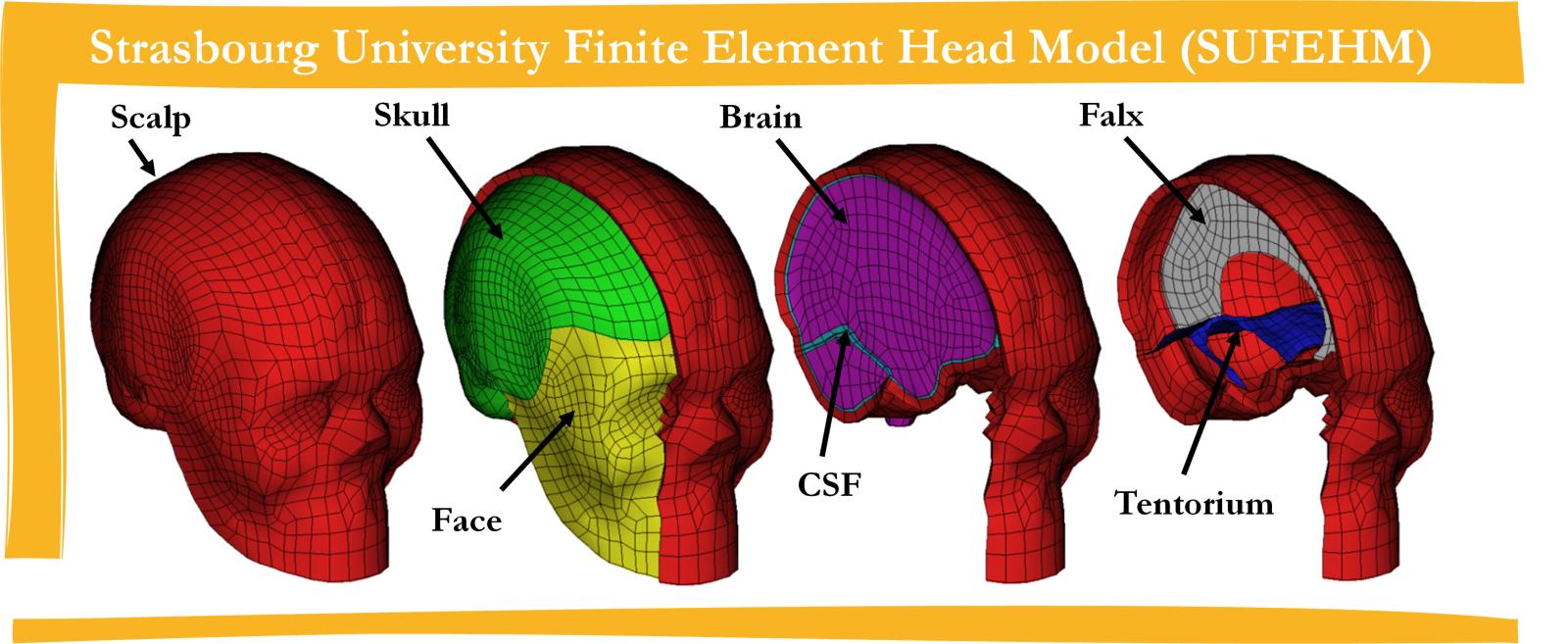
This finite element model of the human head, developed by the ICube laboratory at the University of Strasbourg and known as the Strasbourg University Finite Element Head Model (SUFEHM), has been validated against numerous tests published in the scientific literature. It provides a reliable basis for studying and predicting the brain’s response to different impact scenarios.

Image
modele_cerveau_velo

Mechanical brain model used to calculate intracerebral stresses during an impact.

Simulation of Real-World Traumatic Brain Injuries

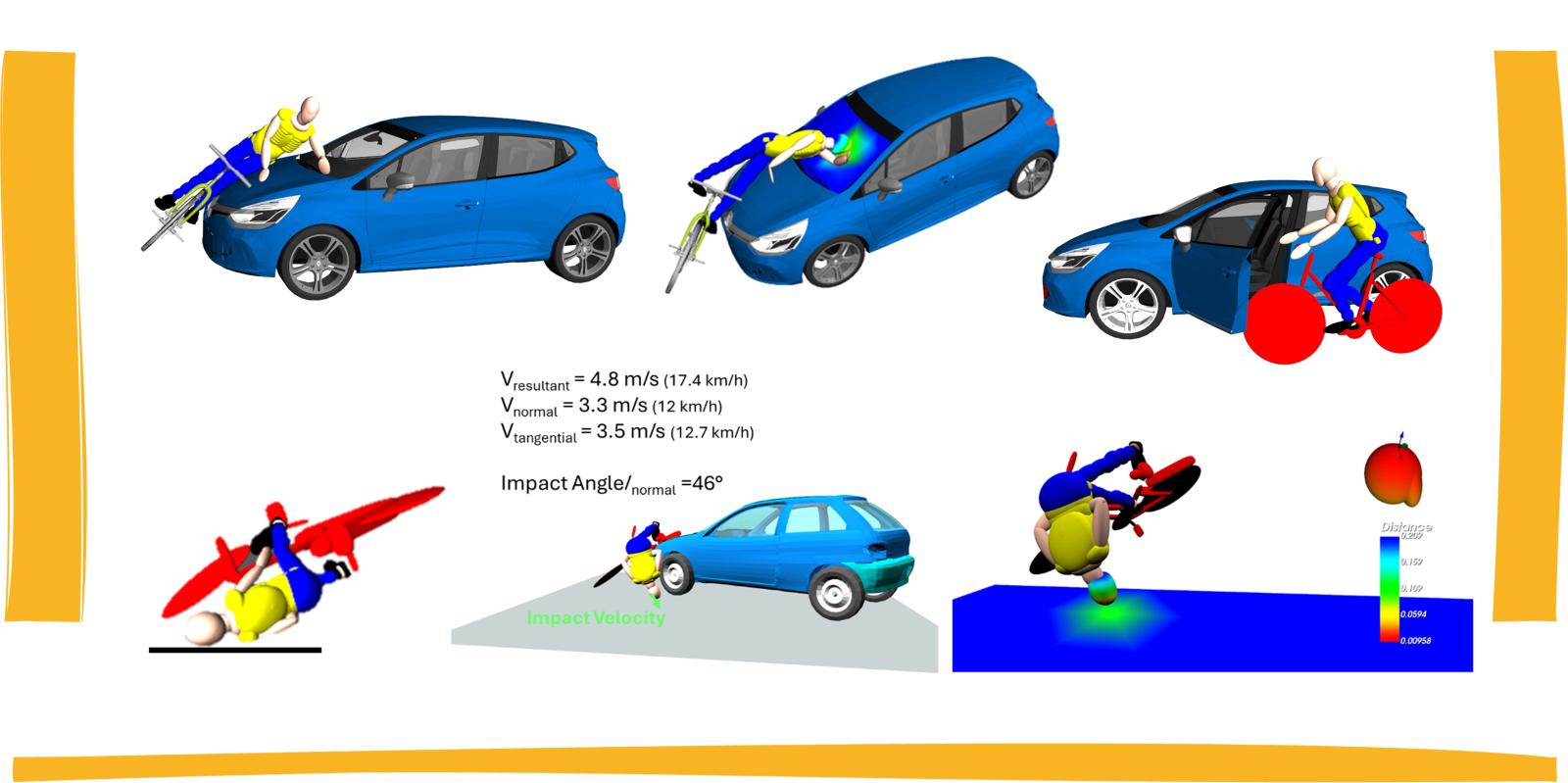
For over 25 years, biomechanical engineers have collected data on traumatic brain injuries resulting from real-world accidents.

Information on accident circumstances and the nature of the injuries has made it possible to reconstruct victims’ trajectories and calculate the exact head impact conditions.

These analyses cover a wide range of individuals, including pedestrians, cyclists, motorcyclists, as well as athletes from various disciplines such as equestrian sports, skiing, and other high-risk activities.

Image
simulations_traumatismes_craniens-velo

Human Head Injury Criteria

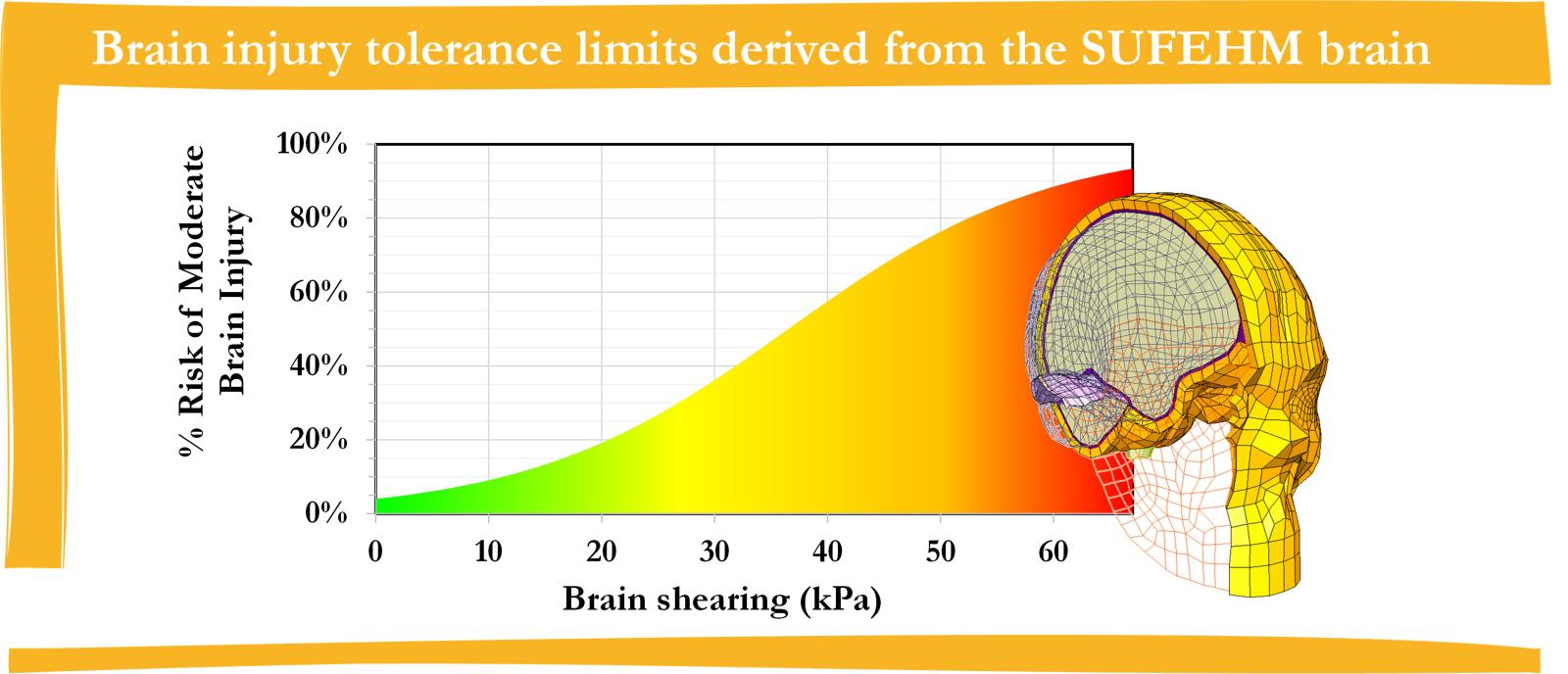
After collecting detailed information on impact conditions, biomechanical engineers were able to theoretically simulate more than 150 real-world traumatic brain injuries. These simulations made it possible to correlate the occurrence of coma with the internal stresses experienced by the brain during impact.

This work led to the definition of the brain’s tolerance limits to impacts, known as injury criteria. Using these criteria together with the data measured by the head surrogate, the device has become a true injury prediction tool, allowing the evaluation and optimization of helmet protection.

Note: Only reversible injuries are considered, such as severe concussions or short-duration loss of consciousness.

Image
blessure_tete-velo

Test and method

Horizontal anvil and
inclined anvil

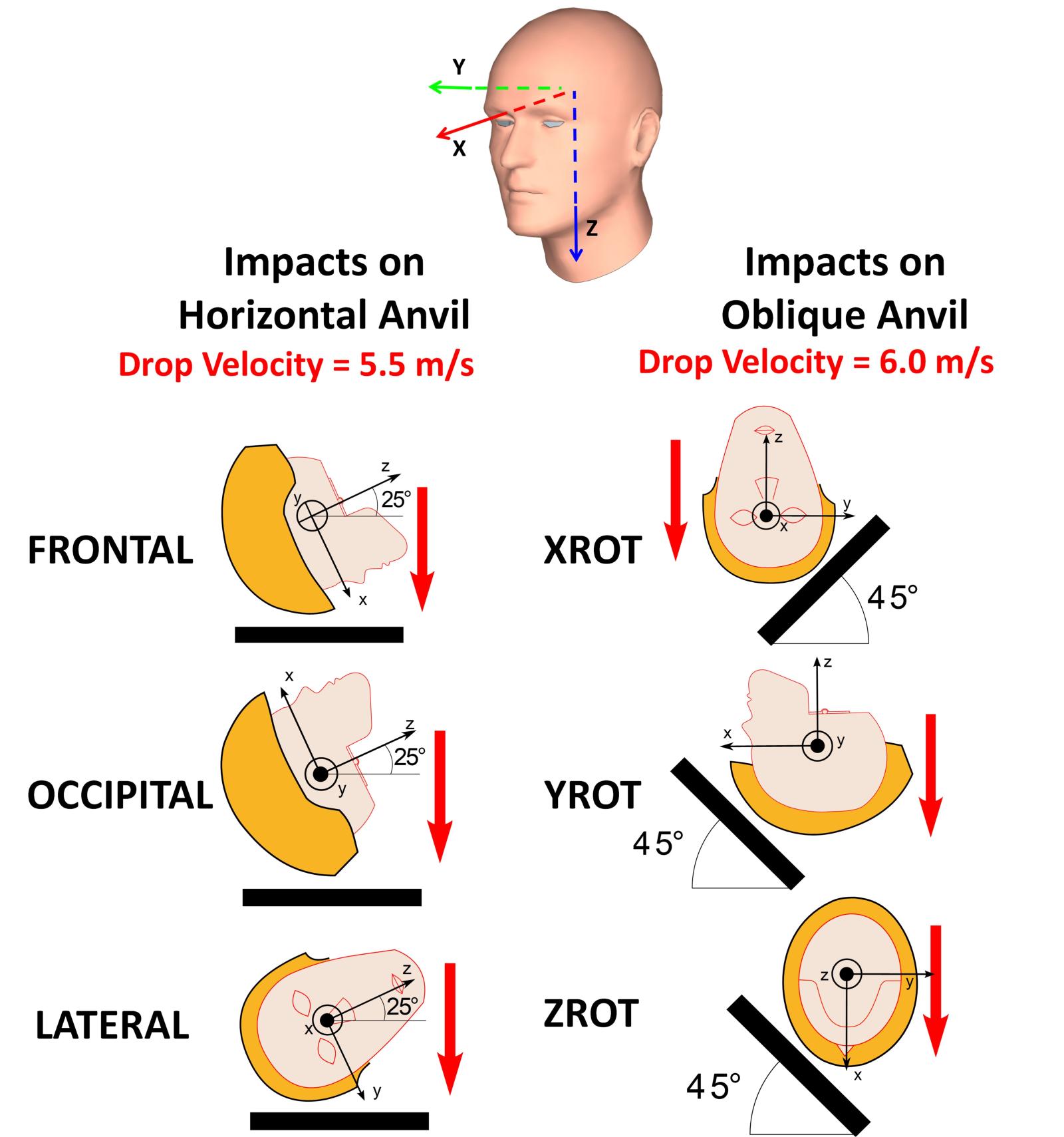
The Certimoov testing method evaluates the shock absorption performance of helmets under conditions that closely resemble real-world accidents. The tests first include so-called linear impacts, simulated by a vertical drop of a helmeted headform onto a flat horizontal surface (flat anvil).

Certimoov goes further by incorporating oblique impacts, simulated by a vertical drop of the helmeted headform onto a 45° inclined surface. This type of impact induces head rotation, a common phenomenon in real falls that is particularly important to consider for brain protection.

To provide a comprehensive and reliable assessment, each helmet model is subjected to six different impact types (three on the flat anvil and three on the inclined anvil), with each impact repeated three times, resulting in a total of 18 experimental tests:

Linear:

  • Frontal
  • Lateral
  • Occipital

Obliques:

  • XROT: Applied to the lateral area, inducing rotation around the anteroposterior axis (X-axis)
  • YROT: Applied to the frontal area, inducing rotation around the left–right axis (Y-axis)
  • ZROT: Applied to the lateral area, inducing rotation around the vertical axis (Z-axis)
Image
methode_axe-velo

Illustration of the 6 impact conditions
(3 linear and 3 oblique)

Enhanced Headform with
Linear
Accelerometers and Rotational Sensors

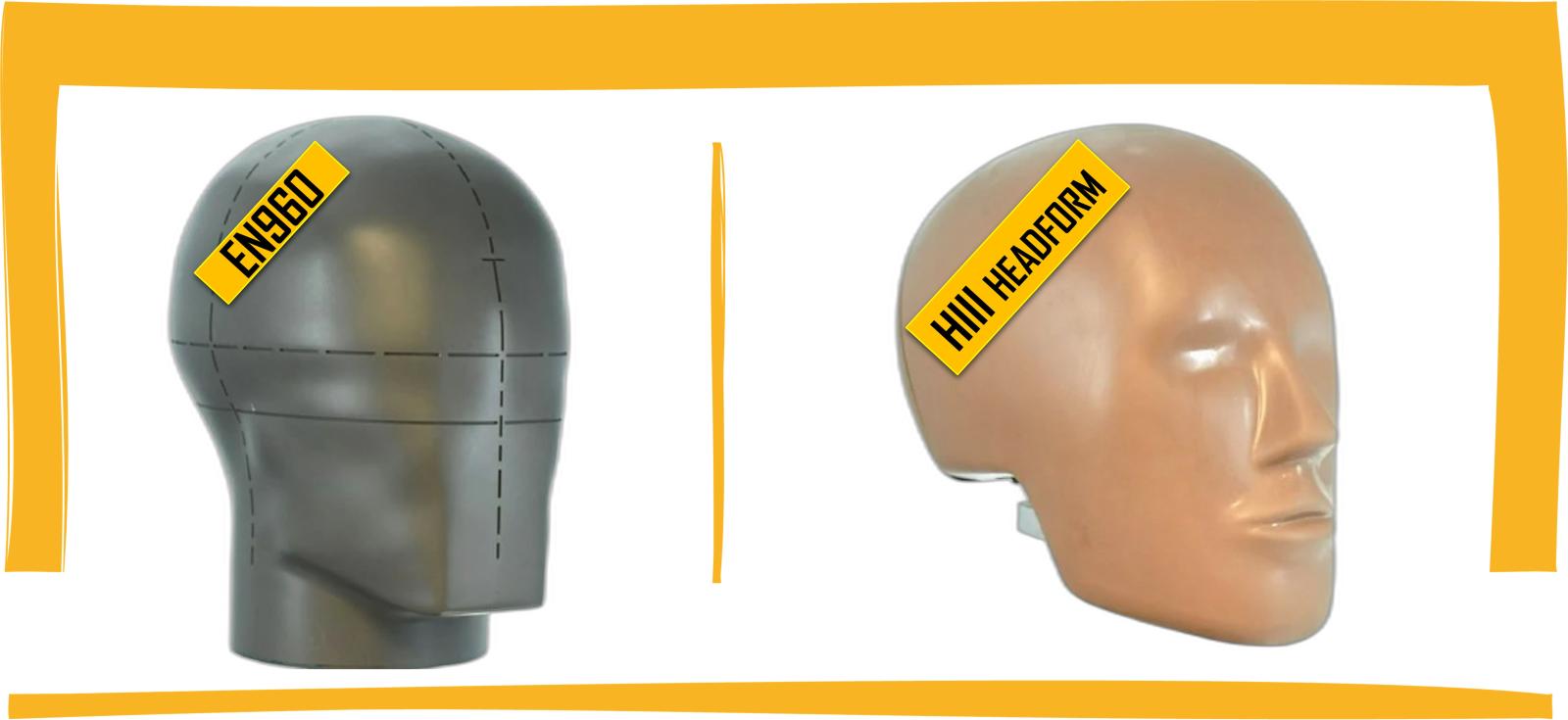
The head surrogate used by Certimoov enables more precise and realistic testing. The headforms used in current standards are not fully adapted to the new types of impacts considered in the Certimoov methodology.

  • Rotational inertia is not adapted to the impacts being tested
  • Head-to-helmet friction is unrealistic
  • Head rotation measurements are incomplete or limited according to existing standards

To overcome these limitations, Certimoov uses an instrumented Hybrid-III (HIII) dummy head. This head model allows impacts to be reproduced more realistically and enables a precise analysis of what happens at the moment of impact.

Thanks to integrated sensors, all head movements are recorded over time: not only the translational accelerations of the head, but also the rotational velocity during the impact. These data provide a complete picture of helmet behavior and the protection it offers to the brain during a collision.

Image
tete_iso_velo

The ISO headform used in current standards and the HIII dummy head used by Certimoov

Theoretical Brain Response to a Real Impact

The major innovation of Certimoov lies in the combination of physical testing with a digital tool capable of estimating the risk of neurological injury.

Specifically, head movements measured during an impact — including both linear accelerations and rotations — are input into a digital brain model. This model allows the analysis of the stresses experienced by brain tissue at the moment of impact.

Based on these data, Certimoov evaluates the intensity of the stresses on the brain and translates them into an injury risk level using a scientifically validated risk curve.

This approach goes beyond simple impact measurements: it allows us to understand what the brain actually experiences during an impact and to more accurately assess the protection provided by each helmet.

Image
methode_couplee-velo

Illustration of the combined experimental and numerical method used to assess the injury risk for a given impact.

Read more

Reading the note

Calculation of an average
risk level of suffering a moderate
neurological injury

To ensure reliable results, each type of impact is repeated three times. In total, a helmet model is subjected to 18 different impacts. Conducting all these tests requires six identical helmets per model to perform tests on both the flat and inclined anvils.

Repeating the impacts ensures consistent, reliable results that accurately reflect the helmet’s real-world protective performance.

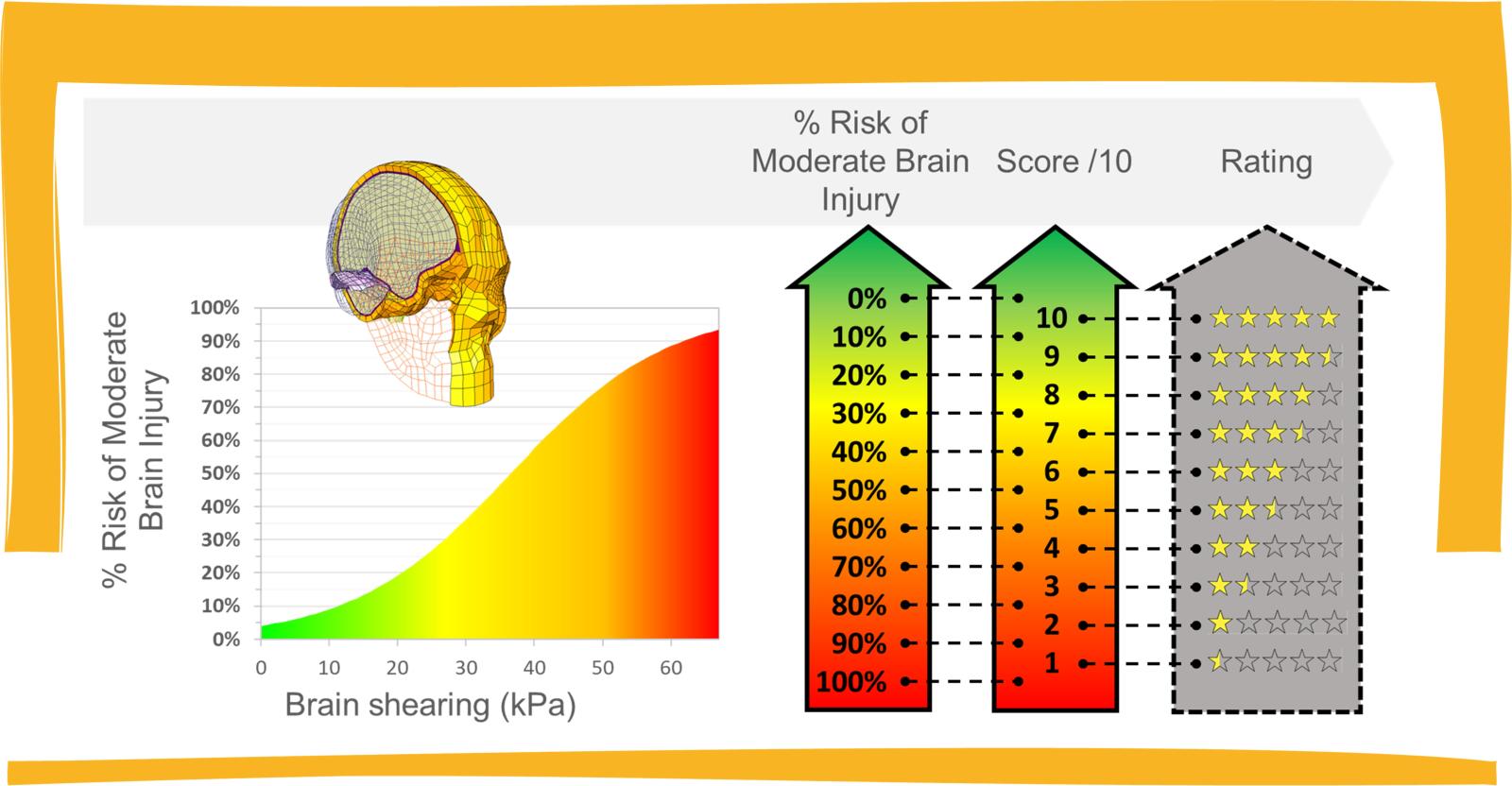
For each impact, a numerical simulation analyzes the stresses experienced by the brain. The results are then compiled and plotted on a risk curve to determine an overall injury risk level, taking all tested scenarios into account.

The helmet’s final score is calculated from this overall risk: the lower the injury risk, the higher the score, allowing for a simple and transparent comparison between different helmet models.

To further analyze each helmet’s protective performance, a specific score is assigned for each of the six impact types using the same methodology.
These detailed results not only inform users but also help manufacturers identify the strengths of their helmets and potential areas for improvement.

Image
calcul_lesions-velo

Method for assigning scores based on the risk of injury obtained overall for the 18 impacts

Inform the consumer
about the comparative level of protection
offered by
different helmets

Because safety must be the first criterion when choosing a helmet, Certimoov allows users to find more details on the level of brain protection provided by the helmet. The headsets tested receive a rating between 0 and 5, with 0 being the lowest rating and 5 the best. It is essential to remember that all approved helmets protect satisfactorily. If some obtain a low rating it is because they have not been manufactured (optimized) to protect against oblique impact but also because the level of injury taken into consideration in Certimoove is a reversible injury. The objective is to identify the best and develop them.

The website encountered an unexpected error. Try again later.